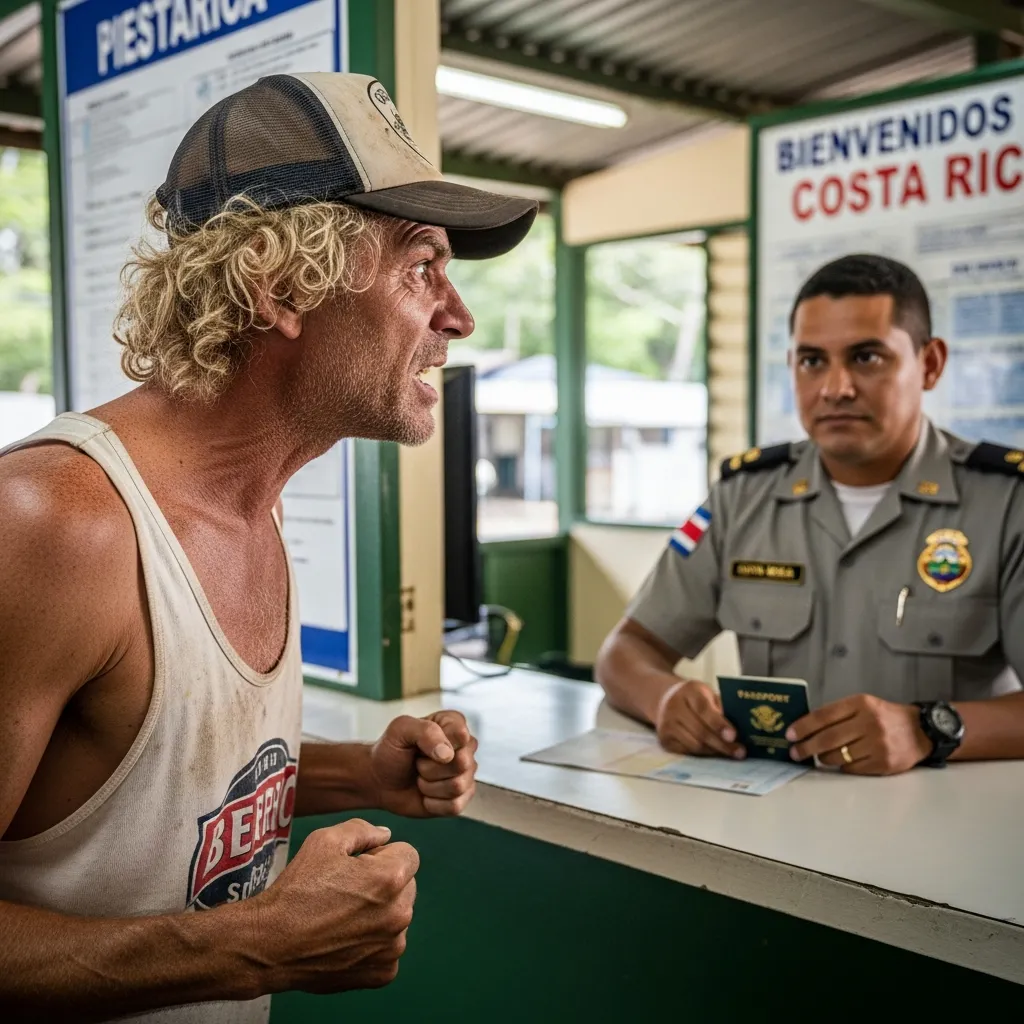
"Brad's" four-year run in Costa Rica ended on a dusty Wednesday afternoon—not because he ran out of money or broke any regulations, but because he couldn't keep his mouth shut for sixty seconds.
The Walking Red Flag
You know the type. Matted bleach-blonde hair that hadn't seen shampoo in weeks. Flip-flops held together with duct tape and denial. A tank top decorated with mysterious stains from last night's beers. That permanently red nose that signals years of cheap alcohol and equatorial sun.
And the smell. Brad reeked like a giant cigarette—that deep, penetrating odor of someone who chain-smokes in enclosed spaces. The kind that arrives five seconds before the person and lingers long after they've left.
At 43 going on 60, Brad shuffled up to the Costa Rican immigration desk looking like he'd slept in a bus station ashtray. Because he probably had.
For four years, he'd been running the same play: exit Costa Rica, hop into Nicaragua for a few hours, turn around, fresh stamp, repeat. Dozens of successful crossings had bred the kind of dangerous confidence that eventually destroys every corner-cutting expat.
Five Fatal Mistakes in Five Minutes
1) The Disheveled Disaster
First impressions at borders aren't suggestions—they're verdicts. Officers spend their days reading people in seconds, and Brad broadcasted his message loud and clear: I don't respect your country, your process, or myself.
Greasy hair. Wrinkled, cigarette-soaked clothes. Bloodshot eyes behind dirty sunglasses he forgot to remove. The immigration officer saw everything he needed to see before Brad even opened his mouth.
2) Four Years, Zero Spanish
"How long will you stay?"
Brad responded in English. No "buenos días." No "hola." Not even an attempt.
Four years in Costa Rica, and he couldn't order coffee in Spanish. That tells an immigration officer you've been taking from their country without giving back—loving the beaches and cheap beer while showing contempt for the culture itself.
3) The Confession That Buried Him
"I've lived here four years!"
The officer looked up. "Do you have residency papers?"
"No, but—"
Brad had just admitted to exploiting tourist visas as a quasi-residency scheme. He should have said he was visiting, touring, enjoying extended travel. Instead, he proudly announced he'd been cutting corners for years, standing there like the officer should congratulate him for it.
4) The Entitlement Eruption
When the officer stamped him for 90 days instead of the 180 Brad had grown accustomed to, most travelers would have said "gracias" and walked away. Ninety days is the global standard—generous by any measure. Some get 180 based on presentation, passport history, and the officer's discretion.
Brad got 90 because he looked like hell and smelled worse.
His response? "What the fuck? I always get 180 days. You can't just give me 90!"
The officer stayed calm. "Sir, please lower your voice."
"This is bullshit! I know my rights!"
Rights. As a tourist. At someone else's border.
The officer had seen enough disheveled, entitled Brad to know he deserved exactly 90 days—possibly less.
5) The Two Words That Ended Everything
Brad could have stopped there. Taken his 90 days, figured out his next move, and walked into Costa Rica with his life intact.
Instead, as he turned to leave, he muttered just loud enough: "Fuck you."
The officer stood immediately. "Sir. Come with me. Now."
Game over.
What I Witnessed
Thirty minutes later, Brad emerged from the back office looking pale and defeated, his 90-day stamp—the one already officially admitting him to Costa Rica—cancelled.
He successfully completed his border run, then his bravado and disrespect revoked it.
I saw him later in the Nicaraguan line, phone pressed to his ear, voice rising with each failed call.
"Bro I said fuck you to the border guy because he was being an asshole and only gave me 90 days. He took me into the back and gave me this piece of paper that I don't even understand and sent me back to Nicaragua.
I'm going to lose my apartment, my laptop, my motorcycle, everything's in Costa!"
Four years of accumulated life—gone. All his belongings locked behind a border he now can't cross back into. His entire existence erased by two words and sixty seconds of lost control.
Don't Mistake Kindness for Weakness
Whatever happened to Brad after that, I don't know. But he got lucky being bounced to the Nicaraguan side, where immigration authorities are remarkably patient and professional with tourists—even disastrous ones who create their own problems.
Nicaragua's officials will likely process his contradictory status without the harsh punishment he earned. He won't face the full weight of his behavior. That's the irony: Brad disrespected Costa Rican authority and now he will likely benefit from Nicaraguan grace.
But here's the lesson Brad learned too late: Central Americans are incredibly kind and hospitable—but they absolutely cannot stand being disrespected.
The warmth and patience you experience in Central America isn't weakness to exploit. It's cultural professionalism. Push it too far, take it for granted, disrespect it—and you'll discover how quickly it disappears.
That Costa Rican officer had been nothing but polite. Calm voice. Clear explanation. Professional throughout. Brad repaid that courtesy with aggression and insults, then discovered that Central American hospitality has very clear boundaries. Cross them, and the consequences are swift and absolute.
Border Runs Still Work—When You Do Them Right
People successfully cross between Costa Rica and Nicaragua every single day. Perpetual tourists who've been doing it for years continue without incident. There are entire companies built around weekend border run services.
The difference? They respect the process.
They show up clean and groomed. Documents organized. A smile and basic Spanish, even if it's all they know. And critically: they accept whatever the officer decides without complaint.
Ninety days? "Gracias." One hundred eighty? "Muchas gracias." Either way, they walk through smoothly.
Brad could have had his 90 days and been fine—plenty of time to plan another run, apply for residency, or arrange proper departure. Instead, his entitlement demanded 180, and his mouth cost him everything.
The Rules That Matter
Essential Border Crossing Etiquette
- Presentation is Everything: Clean clothes, groomed appearance, proper shoes. You're requesting entry to someone's country. Look like someone who deserves it. And don't reek like an ashtray.
- Learn Basic Language: After years somewhere, conversational skills should be expected. At minimum, master greetings and thank you. It demonstrates respect for the culture you claim to love.
- Never Confess to Loophole Exploitation: You're a tourist. Own it. Don't announce you've been gaming the system for years.
- Accept Decisions Gracefully: The officer has complete discretion. Arguing never helps. Complaining only hurts.
- Respect Kindness—Don't Abuse It: Central American hospitality isn't weakness. It's grace that can be revoked instantly when disrespected.
- Keep Your Mouth Shut: Whatever frustration you feel, swallow it. That officer holds your immediate future in their hands.
The Lesson
Brad had it made. Four years of beach life, successful border runs, freedom. Then sixty seconds destroyed it all.
Not because the system changed. Not because border runs stopped working. But because he showed up looking like trash, smelling like a cigarette factory, couldn't speak basic Spanish after four years, admitted to exploiting tourist visas, demanded special treatment, and chirped off to the wrong person at the wrong time.
Five mistakes. Five minutes. All preventable. All his fault.
Meanwhile, that same day, dozens crossed successfully. Got their stamps. Smiled. Said "gracias." Walked back into Costa Rica.
The only difference? Attitude and presentation.
Border runs work when you respect the process. They fail catastrophically when you confuse kindness for weakness and entitlement for rights.
Travel smart. Dress respectfully. Practice basic hygiene. Learn the language. Accept what you're given gracefully. Never mistake hospitality for permission to disrespect.
Your pride isn't worth everything you own.
Every border crossing is a privilege, not a right. Central American hospitality is real, but so are the consequences of abusing it. Act accordingly.