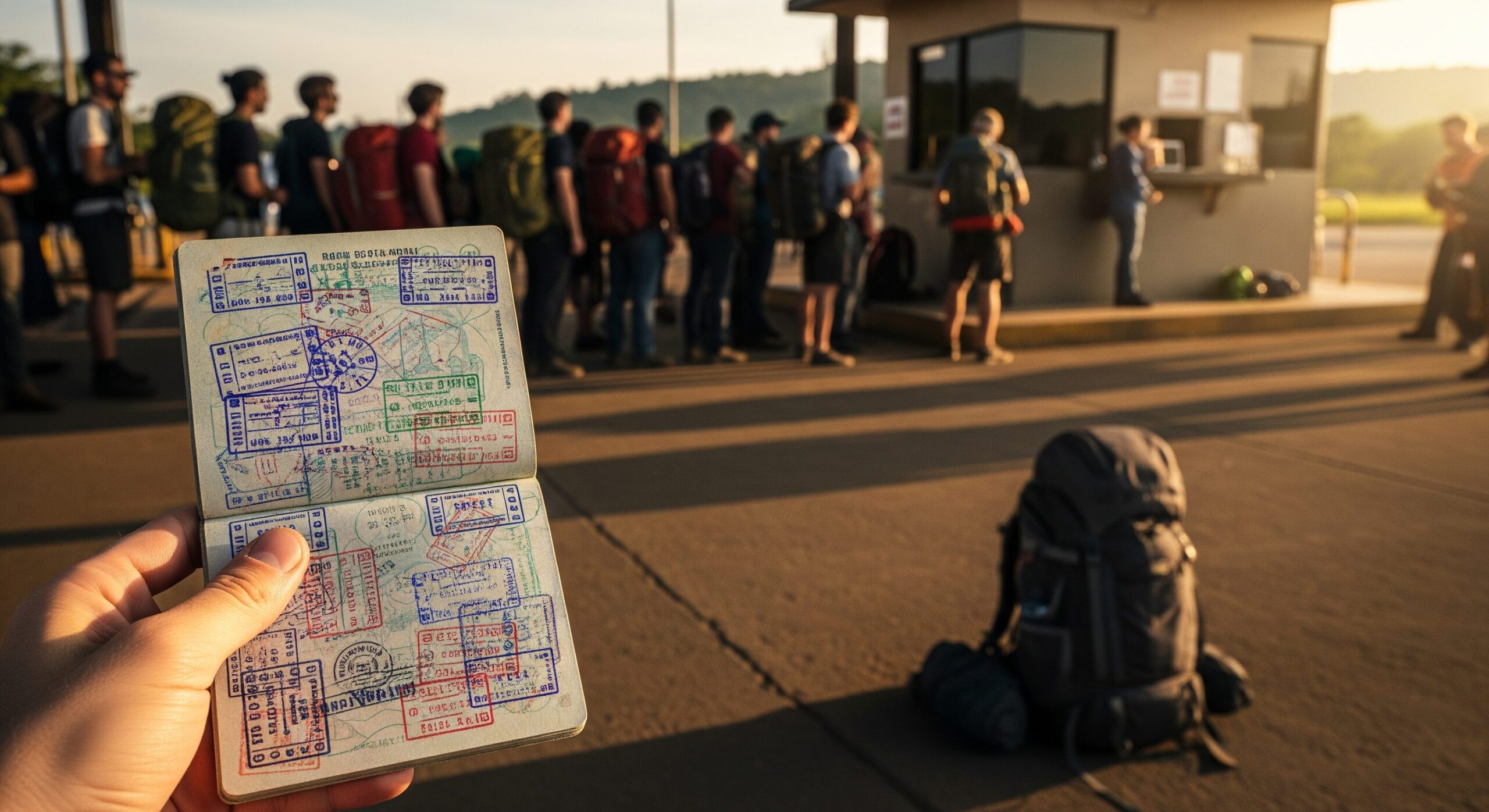
If you stay in the nomad game long enough, you hit the expiration date. For most tourists, that means flying home. For us — digital nomads, slow travelers, and "perpetual tourists" — it means it's time for a Border Run.
It sounds like a spy movie maneuver, but usually, it just involves a sweaty bus ride, a questionable sandwich, and trying to look presentable after four hours of travel.
However, let's be real: The days of infinite border hops are numbered. Countries like Costa Rica, Thailand, and the entire Schengen Zone are deploying tech and policies to stop people from living on tourist visas forever.
Here is your definitive guide to mastering the border hop in 2025 — and why you need a long-term plan before the door slams shut.
What Actually IS a Border Run?
A border run (or visa run) is when you exit a country right before your tourist visa expires, enter a neighboring country, and then turn around — sometimes immediately, sometimes after a few days — to re-enter and get a fresh tourist stamp.
The Catch: It is technically legal to enter as a tourist, but it is not legal to live there permanently on tourist visas. Immigration officers know this game. If you look like you're abusing the system, they can (and will) deny you entry.
The "End Game": Why You Need Residency (Eventually)
This is the section nobody likes to talk about because it's not "fun." But if you want to keep this lifestyle, you need to hear it. Border runs are a loophole, and loopholes get closed.
We are seeing a global shift in 2025. Governments are tired of "perpetual tourists" working tax-free and driving up local rents without contributing to the system.
- Europe (Schengen): The new EES (Entry/Exit System) and ETIAS are digital dragnets. They calculate your 90/180 days automatically. There is no "human error" to exploit anymore. If you overstay by one day, the computer flags you, and you could be banned from the entire EU.
- Thailand: They are cracking down hard on land border entries. You generally only get two land entries per calendar year now. After that? You need a real visa (Elite, LTR, or DTV) or you're out.
- Costa Rica: New bills are pushing to limit how many consecutive tourist visas you can string together. They want you on their Digital Nomad Visa, not doing monthly runs to Nicaragua.
The Nomad Strategy for 2026:
Stop thinking of border runs as a permanent lifestyle. Use them as a bridge, not a foundation. If you love a place enough to live there for a year, get the residency or the Digital Nomad Visa. It protects you from sudden rule changes, deportation, and the anxiety of "will they let me back in?"
Top Regions for Border Hopping (While It Lasts)
Not every border is created equal. Here is the landscape right now:
1. Central America (The Classic)
- Costa Rica ↔ Nicaragua: The most popular run. You exit Costa Rica (usually at Peñas Blancas), spend a few days in San Juan del Sur or Granada, and come back.
- Warning: Costa Rica is strict. They prefer you stay 3+ days out. If you turn around in an hour, you might get flagged as a "perpetual tourist."
- Costa Rica ↔ Panama: Another common route (Paso Canoas or Sixaola).
- Guatemala ↔ Mexico: Popular for those maxing out Mexico's 180 days. Note: Mexico is no longer guaranteeing 180 days. Officers might give you 7 days if you don't have a return ticket.
2. Southeast Asia
- Thailand: Much harder than it used to be. Land border entries are strictly limited. If you have a history of "Out-In" stamps, expect an interrogation.
- Vietnam: Often requires an e-visa, so you have to apply before you re-enter — you can't just walk back in.
The "Golden Rule" of Border Hopping
There is one document that trips up 90% of travelers. It's not your passport. It's Proof of Onward Travel.
Immigration officers are trained to look for one thing: Are you going to leave?
If you show up with a one-way ticket and a backpack, you look like a risk. They want to see a ticket out of the country within the allowed stay.
A Personal Horror Story: The "Beach Trip" Disaster
I learned this the hard way. I was living in Nicaragua and decided to take a short weekend trip to Costa Rica with a group of friends. We weren't trying to move there; we just wanted to hit the beach in Guanacaste for a few days.
We rolled up to the border, relaxed, flip-flops on, assuming it would be a breeze. The Costa Rican officer asked for our "ticket de salida" (exit ticket).
"We're taking the bus back on Sunday," I said.
"Ticket?" he asked.
We didn't have one. We were planning to buy the return ticket at the station when we were ready to leave. Big mistake.
He refused to let us in.
There we were — six of us, sweating in the tropical heat, scrambling for Wi-Fi that didn't exist. We had to run to a sketchy ticket counter on the border and buy overpriced bus tickets for the next day just to show the officer a piece of paper. We wasted $50 each on tickets we threw in the trash five minutes later.
It was amateur hour. Don't be like us.
The Solution: The "Rent-a-Ticket" Trick
You do not need to buy a $500 flight home just to satisfy a border guard. You just need a valid reservation.
I now use an Onward Ticket service for every single crossing. It gives you a verifiable flight reservation for 48 hours — enough to show the officer or the airline check-in desk — and then it automatically cancels.
It costs about as much as a coffee, and it saves you the panic of being denied entry.
Grab one here before you pack your bags: https://404officenotfound.com/onward
The Step-by-Step Protocol
If you are doing a run soon, follow this checklist to stay safe:
Step 1: Check the "Stay" Requirements
Some countries require you to be out for 72 hours (Costa Rica often prefers this). Others don't care if you turn around in 20 minutes. Know the current mood of the border you are crossing.
Step 2: Dress Like a Tourist (With Money)
Do not look like a "begpacker." If you look like you have zero dollars and sleep on the beach, immigration thinks you will be a burden on the state.
- Wear: A clean shirt, shoes (not flip-flops), and look showered.
- Carry: A printed confirmation of your hotel/Airbnb for the first few nights.
Step 3: The "Story"
Keep it simple.
- Officer: "Why are you coming to Costa Rica?"
- Bad Answer: "I live here basically, just refreshing my visa."
- Good Answer: "Tourism! I'm really excited to see the volcano/beach/sloths."
Step 4: Have Your Exit Ticket Ready
Don't wait for them to ask. Have it printed or screenshot on your phone. I use this onward ticket service to generate one the day before I travel. It's the cheapest insurance you can buy, and has always worked in my case.
Join the Underground
Border runs are just one part of the puzzle. If you're trying to build a location-independent life — without going broke or losing your mind — you need people who get it.
Come hang out in the 404: Office Not Found Discord if you want real-time updates, stories, and a helping hand from other digital nomads riding the same waves.
Travel smart. Stay legal. And if you're ever heading to a border, always grab your Onward Ticket before you go. See you out there.
Join the Discord Community